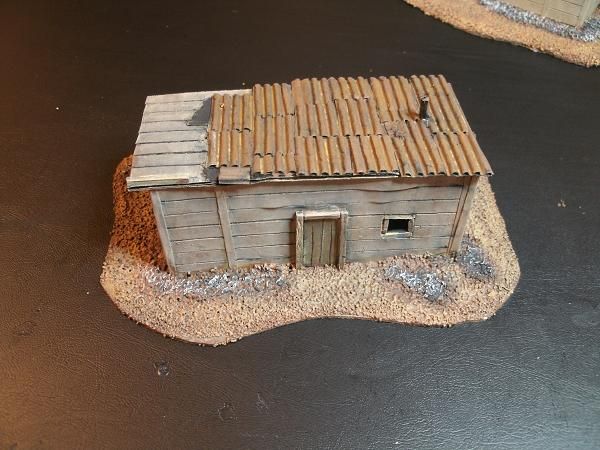
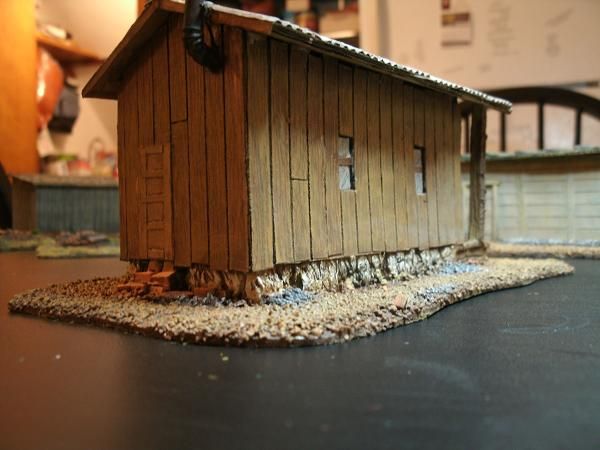
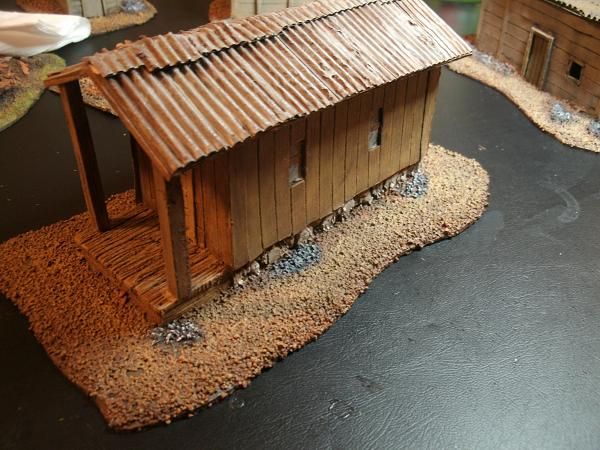
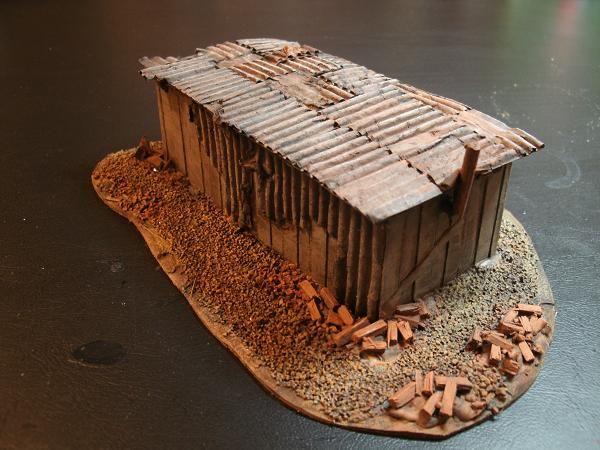
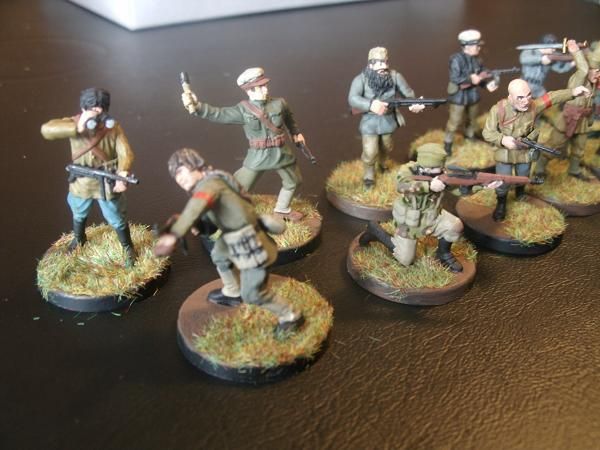
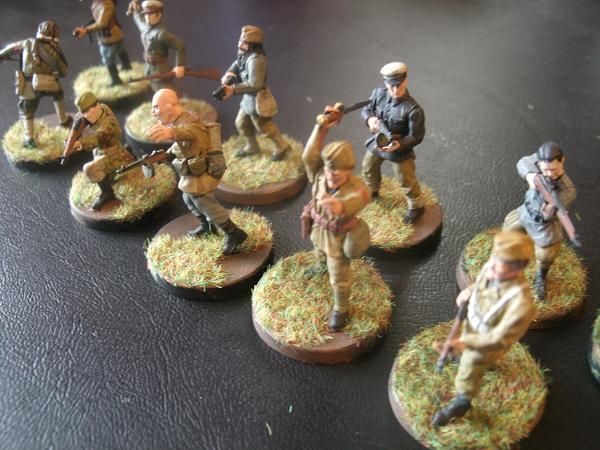
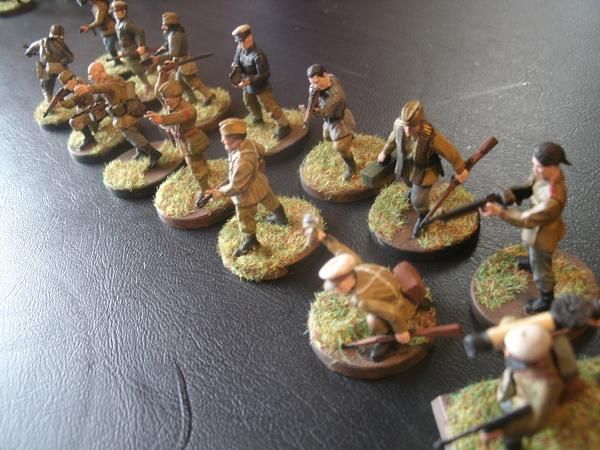
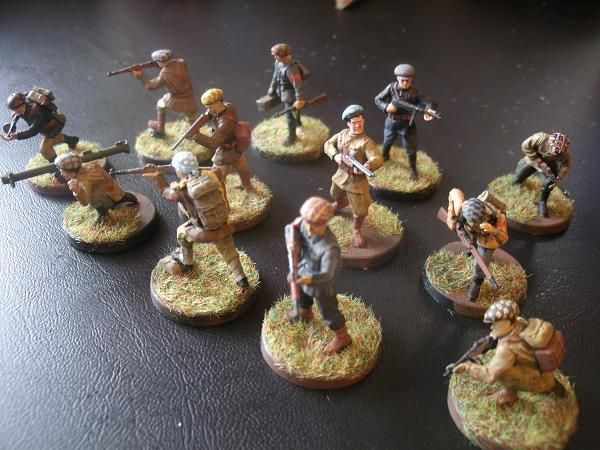
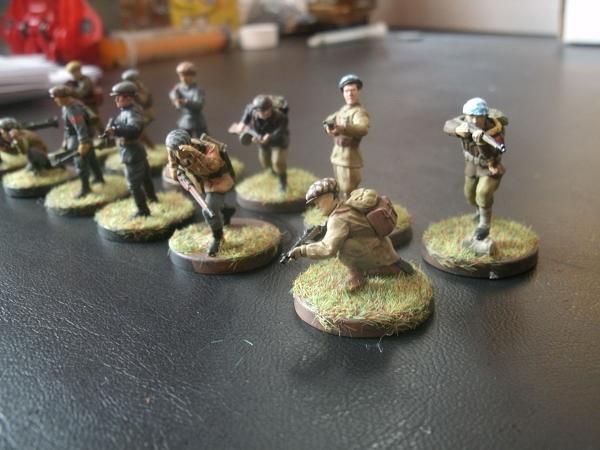
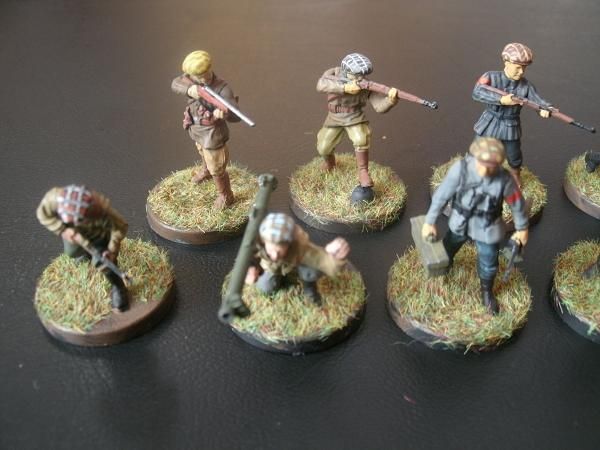
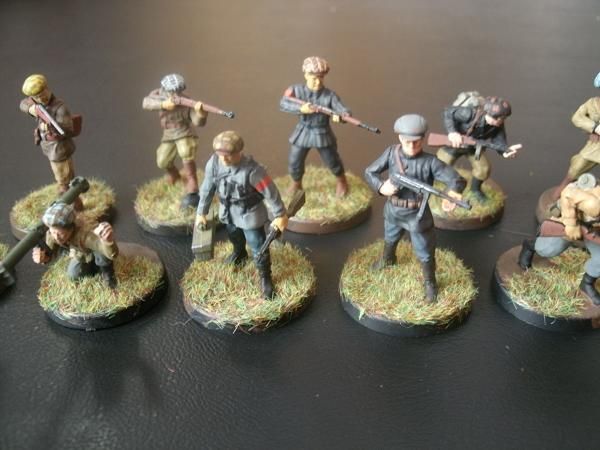
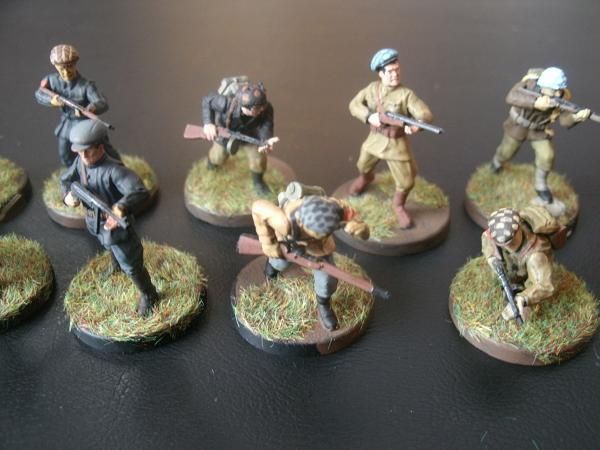
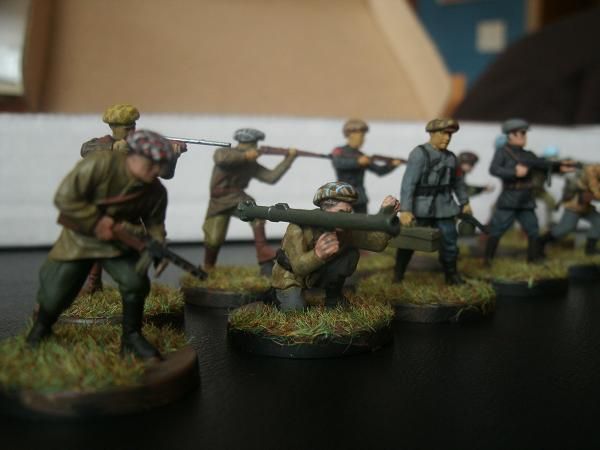
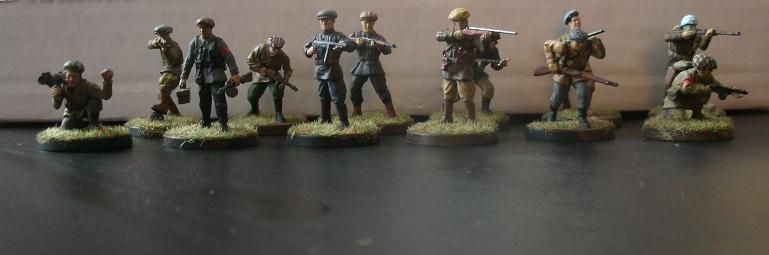
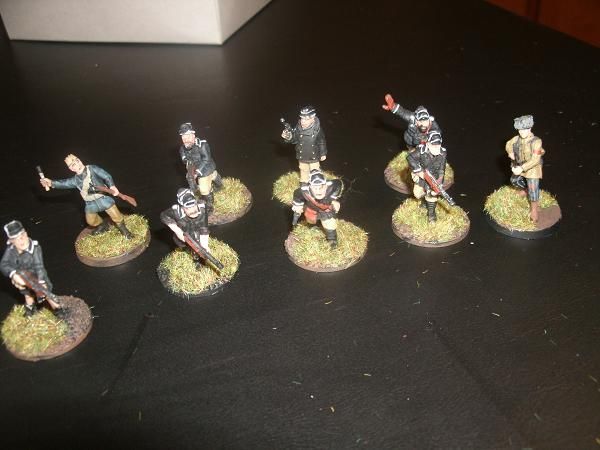
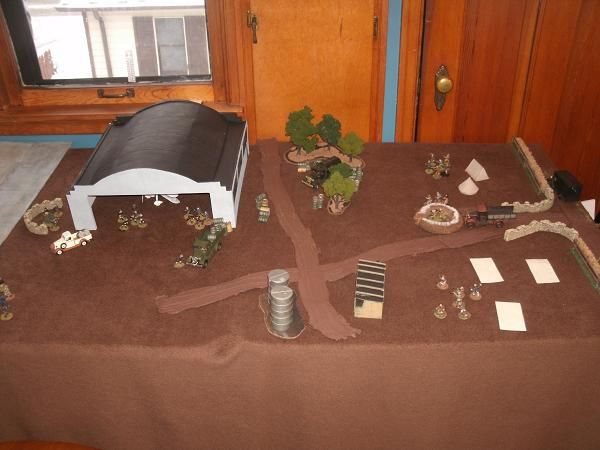
This is a photo of hanger no. 1 at the Tulsa Municipal Airport sometime in the early to mid 1930's. The small building in the foreground is the Spartan School of Aeronautics owned and built by William Skelly. I had started working on the Spartan building but to many other things keep getting in the way, and it kept getting put aside. I probably could have finished it yesterday, but opted instead to work on my partisan army that I have been putting off for a long time now. It will get used, as the KVOO radio station building is very similar.
 |
| Hanger no. 1 in the early 1930's |
Back on topic, hanger no. 1 was the first hanger at the Tulsa airfield
that opened in 1928. The previous airport, located closer to town, was
part of the 1927 Ford reliability tour but was barely able to manage all
of the planes that took part in the tour that year. The town of Tulsa
was told that if they wanted the tour back again in 1928 that they
needed a larger airfield. So in 1928 William Skelly with the help of
other prominent business men bought the land and built the new airport.
It was then bought by the city of Tulsa in 1929. It was the busiest
airport in 1930, or so it was claimed. While it did handle more
passengers in February and April of that year than any other airport in
the world. Including, London, Paris and Berlin, the claim seems a bit
dubious. Most of this traffic having to do with the local oil field
business, but there were also many wealthy people in Tulsa at this time
and it seems that Tulsa was a happening place. After all, more
money was made on the Oklahoma oil boom than the California gold rush
and Colorado silver
rush combined. As a result, Tulsa was largely unaffected by the Great
Depression. While the rest of the state of Oklahoma lived in crushing
poverty that caused many farm laborers to migrate to California, the
people of Tulsa were living large.
On to the game.
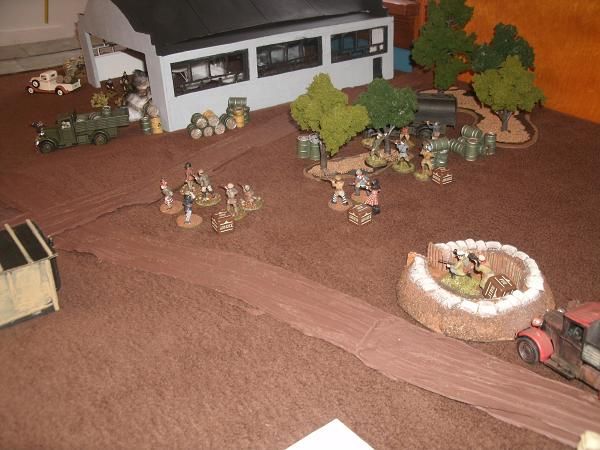
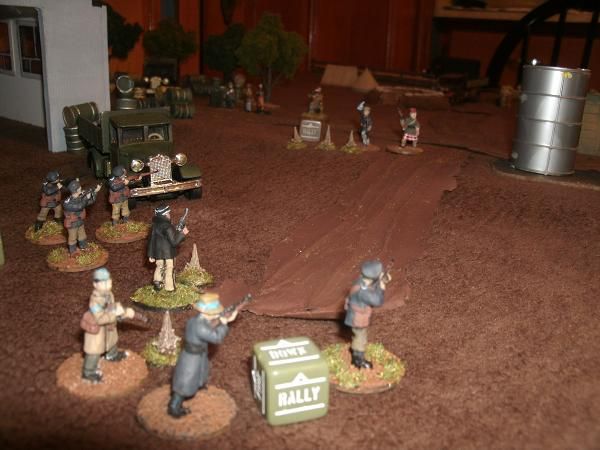
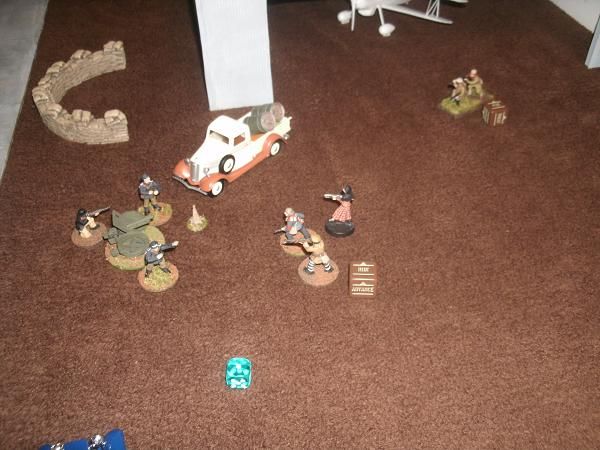
After assaulting the south gate of the Tulsa Municipal
airport, the Cherry Street Irregulars (the local IWW chapter) pause momentarily
to regroup, redistribute ammunition, and to bring up reinforcements including
the Weinerwerfer.
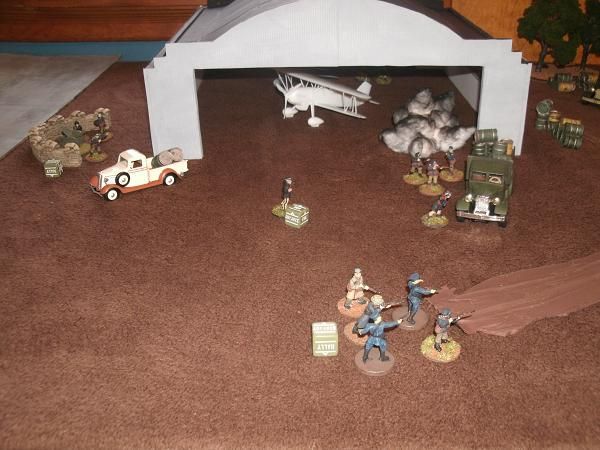
Meanwhile, members of the first squad, Company M of the
Black Legion arrive at the hanger after hearing the sounds of gunfire at the
south gate. They bring with them a light howitzer, several volunteers and the
two members of the Tulsa police department who are at the airport at the behest
of the Mayor of Tulsa, to investigate the Black Legion presence. Upon arriving at
Hanger no.1 the police officers spot Walt Little* leading the communist
rabble. Having lost said felon on a previous occasion they are eager to
apprehend him and regain their lost rank.
* A wanted felon and the former owner of “A Little Used Book Store” on Cherry Street in downtown Tulsa Oklahoma. Mr. Little’s store was
found to have a copy of the communist manifesto for sale, a felony under Oklahoma state law. After his arrest an angry mob of pro-MacArthur supporters smashed
the stores windows, looted the cash register and coke machine, then set the store ablaze. After
spending three days in jail the prisoner was to be transferred to a state
correctional facility. Officers Buckner and Visage were escorting the felon to
the train station, where they were to be met by state police officers to
complete the transfer. On the way they made an unauthorized stop at a local speakeasy
just a block away from the police station. Their intention was to speak with
police Chief Gunderson as to whether the prisoner should be transferred as planned, or
shot for attempting to escape. Upon exiting the squad car they noticed a woman driving a car pull up and park in the space behind them, she then exited her vehicle and brandished a shotgun. After first attempting to
reason with the woman, later identified as Mrs. Little, they were fired at
several times, whereupon they ran into the speakeasy for cover. Mr. and Mrs.
Little managed to escape before the other twelve Tulsa police officers stumbled
out of the door to arrest Mrs. Little.
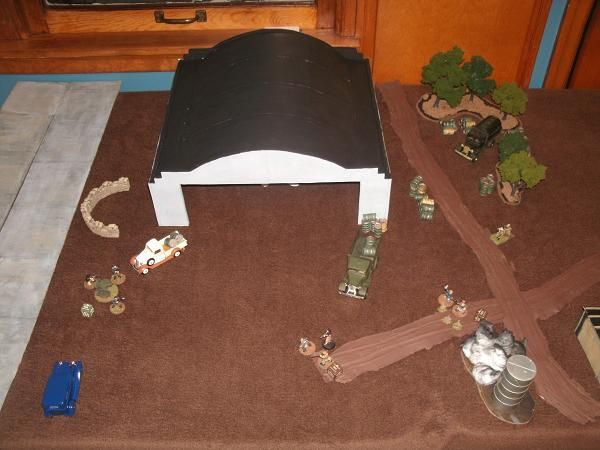
 |
| My humble attempt at creating hanger no. 1 |
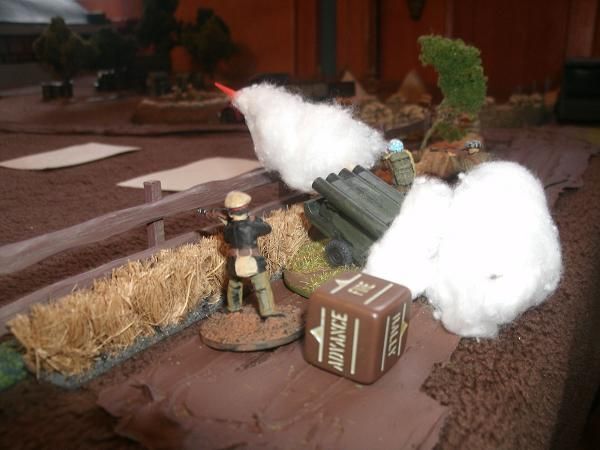
The IWW forces lead the assault by firing the dreaded
Weinerwerfer to put the fascist pigs in disarray. While the original target
survives unscathed, the same cannot be said of a second squad nearby.
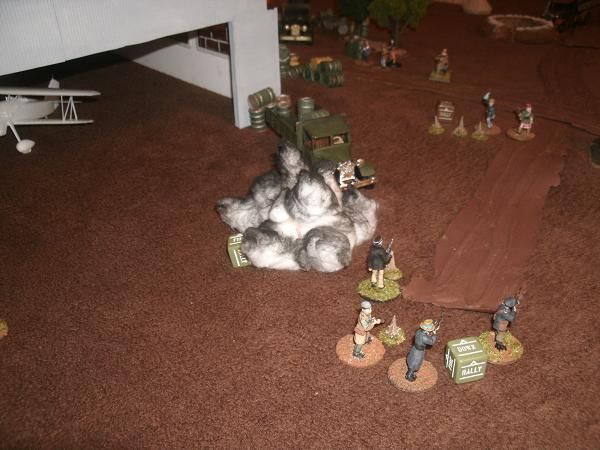
A stray rocket flies through the widow of the hanger and
lands among the members of the first squad. The explosion kills two of the
members of the squad and lightly wounds a third.
Though out of range, the Lewis gun lays down a barrage of
fire as the other communist forces move forward firing at various targets.
The Black Legion forces respond with a Legion NCO
accompanied by two of Tulsa’s finest, and two local MAC volunteers moving
forward and firing at the oncoming communist forces. The first squad, quickly
recovering from the shock and awe of the mighty Wienerwerfer exit the hanger
and take cover behind a truck along with the spotter for the light howitzer.
The second squad moves further back into the hanger hoping to out flank the
commies and catch them unaware.
Two heroes of the communists uprising respond by gunning down the officers
Buckner and Visage. There will be no redemption today.
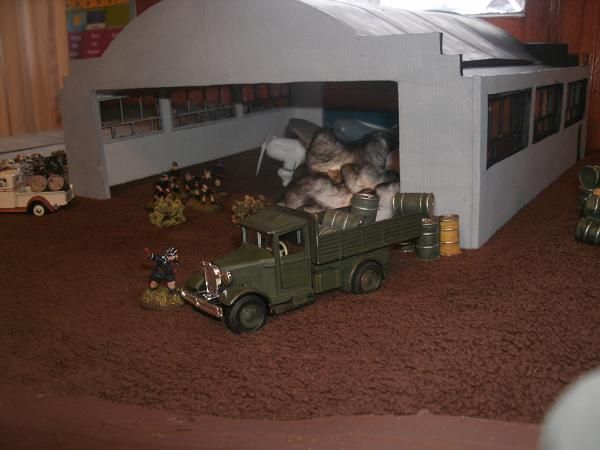
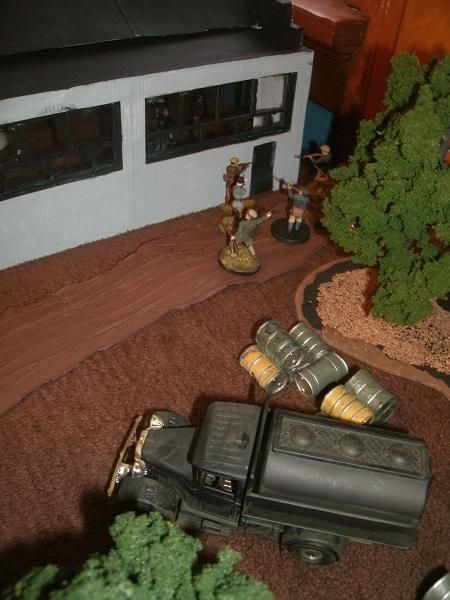
Shortly thereafter the shriek of rockets firing is heard
again, and the spotter for the howitzer crew, standing behind the truck in this
photo, is incinerated by a homemade HE rocket.
Back on the other side of the Hanger, the second squad of
communist move out from their positions in the trees and enter the hanger
through the side door. They are met by fierce small arms fire as they and the
second squad of the Black Legion fascist oppressor monkeys battle in close combat and hand-to-hand. In
the end, no man (or oppressor monkey) lives to tell the tale.
Back at the other end of the hanger, the MAC militia decides
to take cover despite the urgings of commander to assault the commies. The IWW squad, also having taken a few casualties decides to take cover as well.
Again, the shriek of rockets firing fills the air. Again,
for the third time today, the Weinerwerfer finds it’s mark and the rest of the
first squad of Black Legion soldiers is obliterated (mmmmm BBQ pork). Shortly after this, the
communist LMG team moves forward and guns down Commander Vogel.
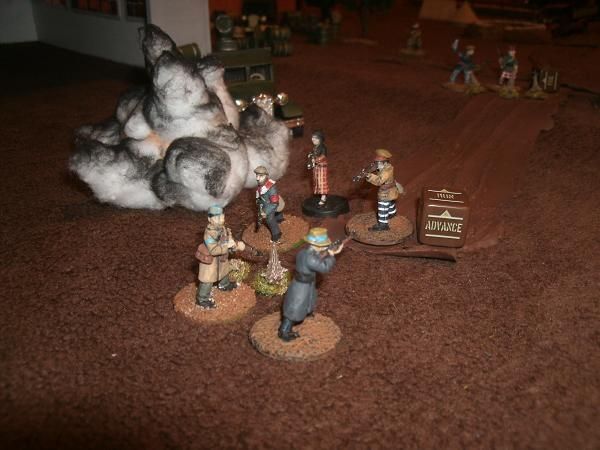
Unable to inspire his comrades to assault the remaining MAC
volunteers, comrade commander Little decides to show them “how it’s done”. The
command group launches an assault and weathers the return fire without harm. The
two MAC volunteers are sent to meet their maker.
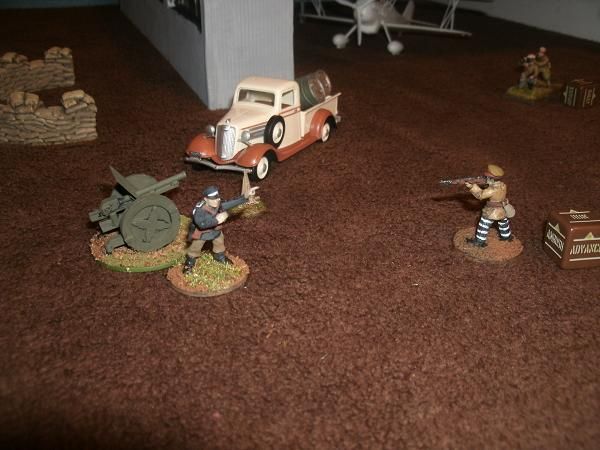
Having lost their spotter, the howitzer team is forced to
move their gun in order to fire at the communist forces. After the two MAC
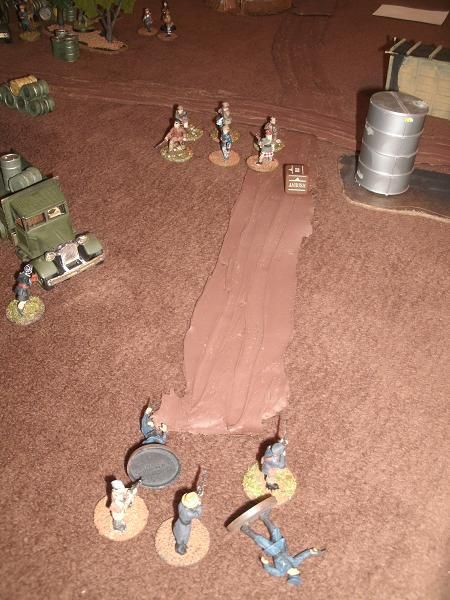
volunteers are brutally cut down, the howitzer team fires at the IWW command team. Their shot goes long and an fuel storage tank behind the
command group goes up in flames in a huge explosion (oops!).
Whether through adrenaline soaked courage or primal
desperation, comrade commander Little, his wife, and his runner charge the
howitzer. No longer will the football players of the world mock the manhood of those who major in the Library Sciences! The men manning the howitzer manage to reload the howitzer before
commander Little and his team can reach them. [So at this point, all I need is
a two or higher to hit the command team. Anything but a one! Well you can see
the result in the picture. Of course it turns out that I forgot about the point blank bonus, it turned out the same at any rate.] The howitzer fires and the second oil tank
goes up in flames.
The assault doesn’t go so well for either side and after a
desperate fight, only Mr. Little and a Black Legion NCO remain up. Comrade Commander
Little shows the men manning the Lewis machinegun why he is the comrade commander.
After tending to his wife’s wounds he quickly organizes the
remaining men and women of the Cherry Street Irregulars. Among the comrades is
a man who was working on his pilots license before the stock market crash in
1929. Though rusty, his skills are adequate enough to get one of the planes
parked in the hanger off the ground before the dirty rotten fascists can get more forces
to Hanger no. 1. Satisfied with the day’s gains comrade Little orders his
forces to take everything they can. The communist convoy back home includes two
new trucks, a pick-up truck and a police care. In addition they score hundreds
of gallons of fuel, a howitzer, small arms and ammunition.
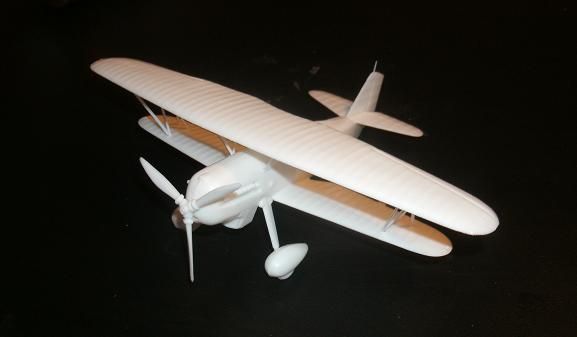
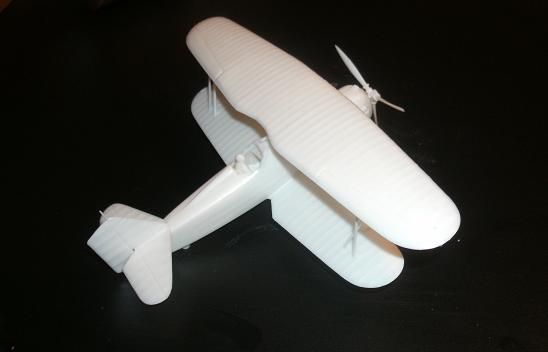
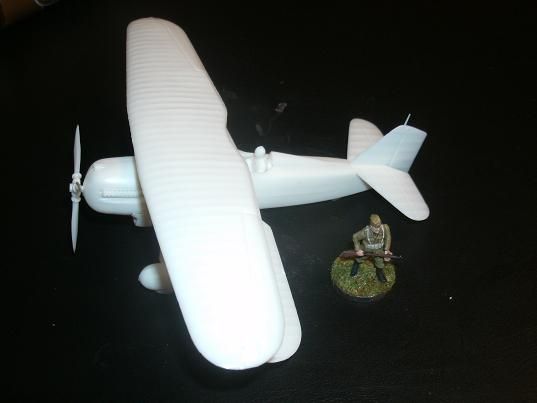
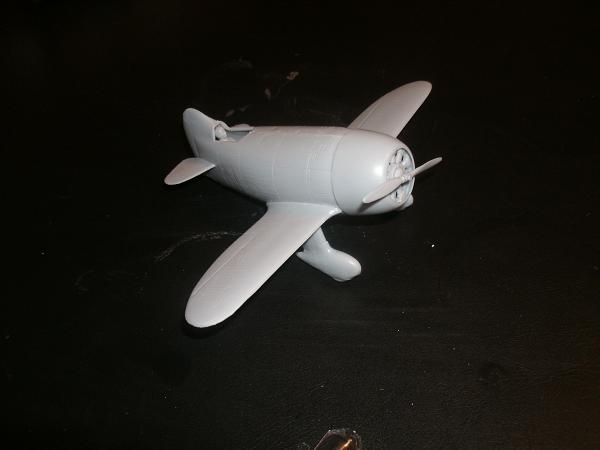
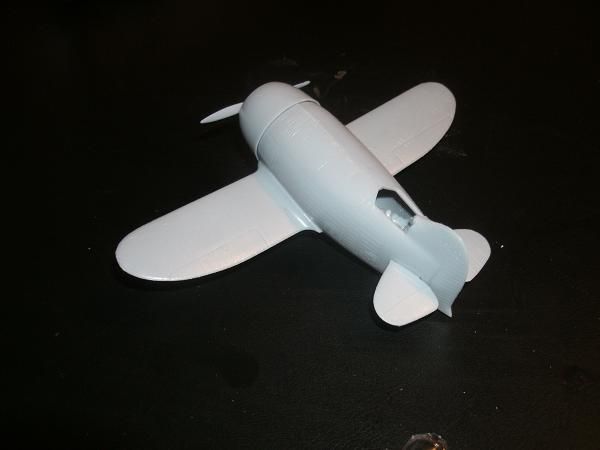
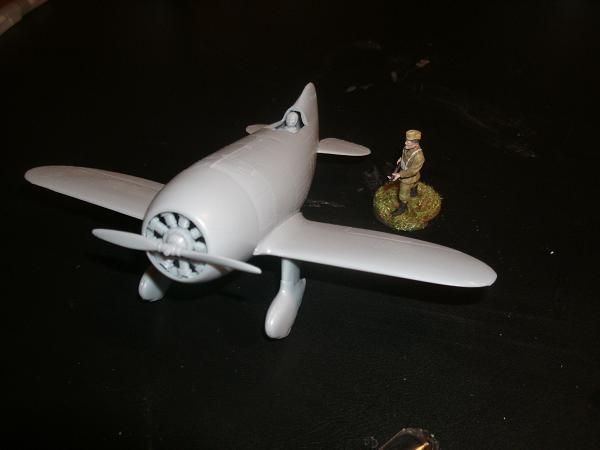
The prize for the this particular game was first pick of the three airplanes that I bought, and am working on for this game. So we will see which plane the communist menace chooses.
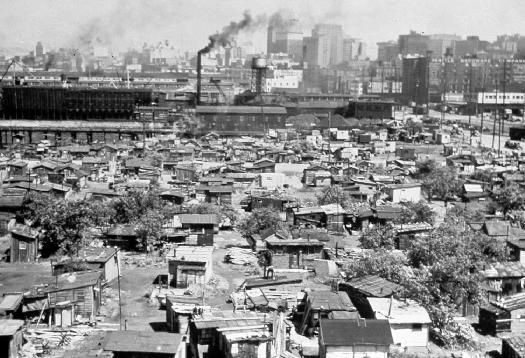
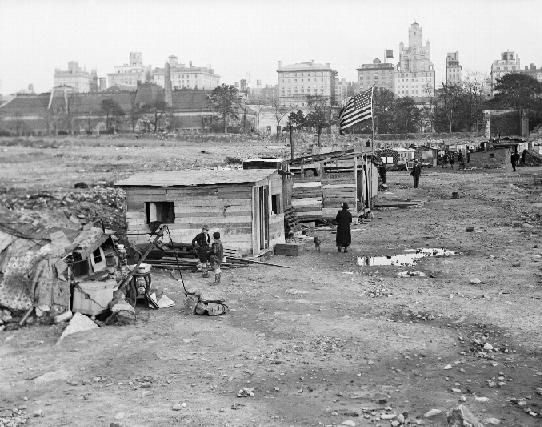
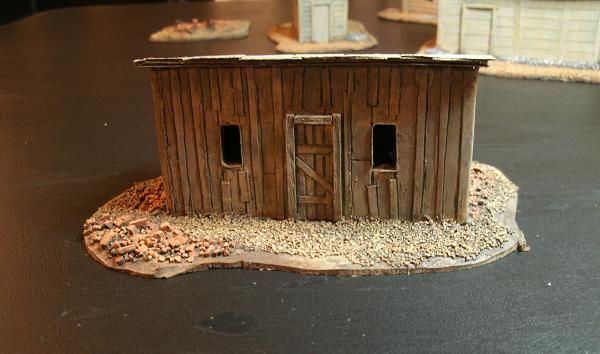
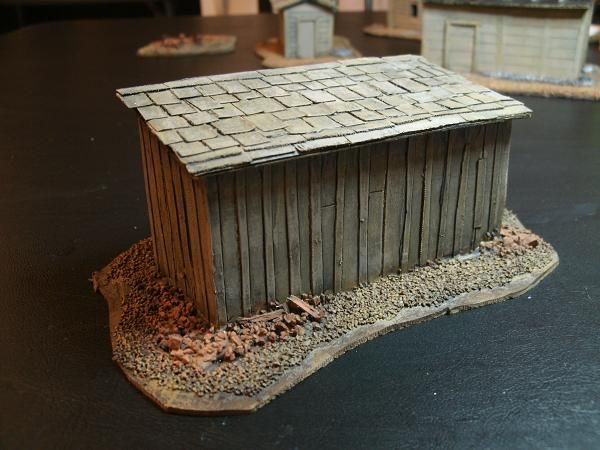
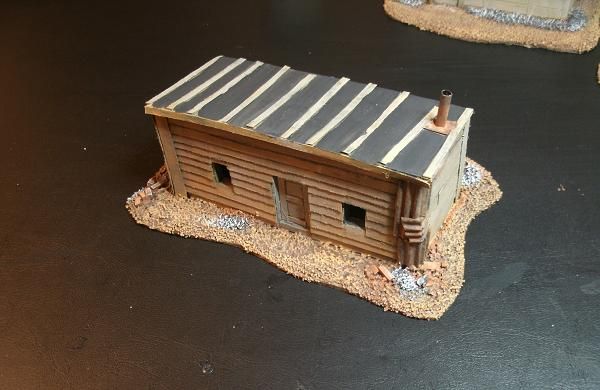
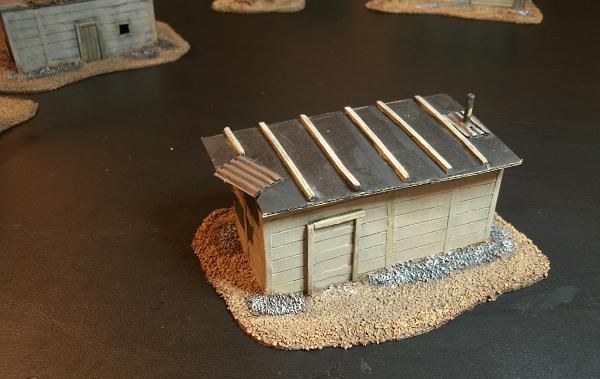
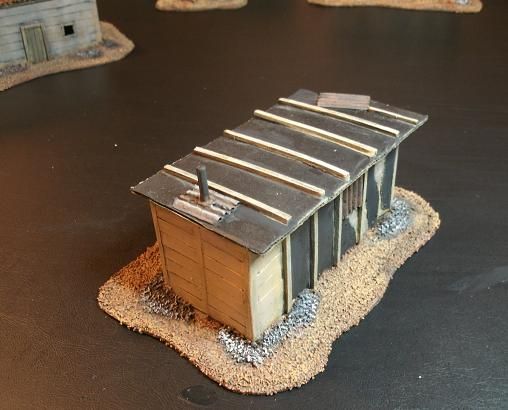
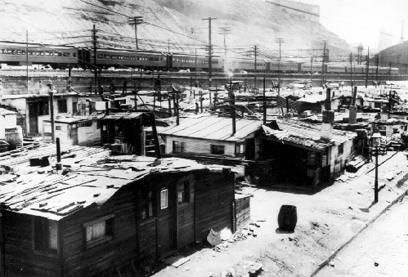 reported to only have outside walls, and if the inhabitants were lucky they might have been able to acquire some tar paper to keep the roof from leaking and the wind from blowing in through the cracks between the boards. As you can see in the picture on the left, most seemed to at least have a potbelly stove to provide warmth and a means to cook. Still, people died from exposure, starvation and I am sure from despair.
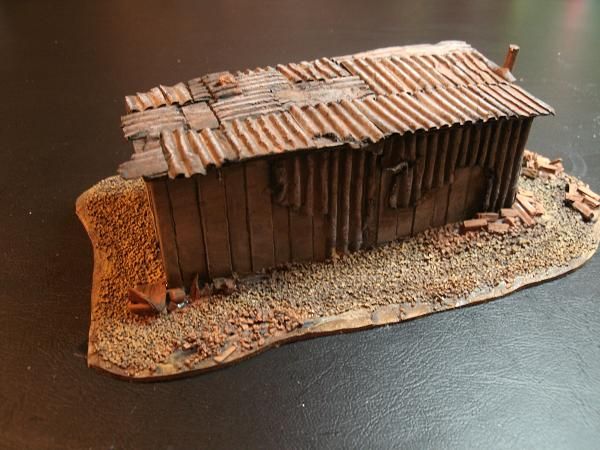
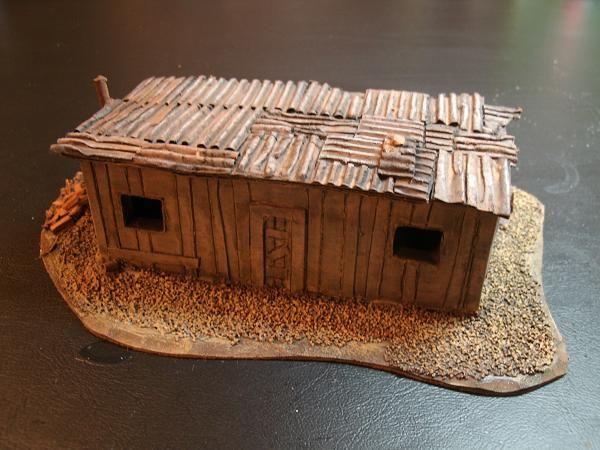
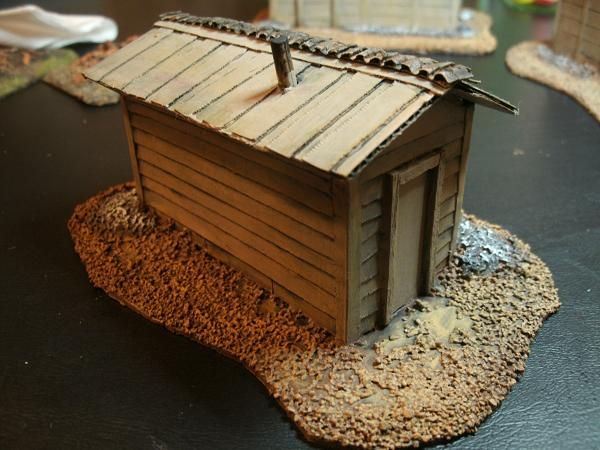
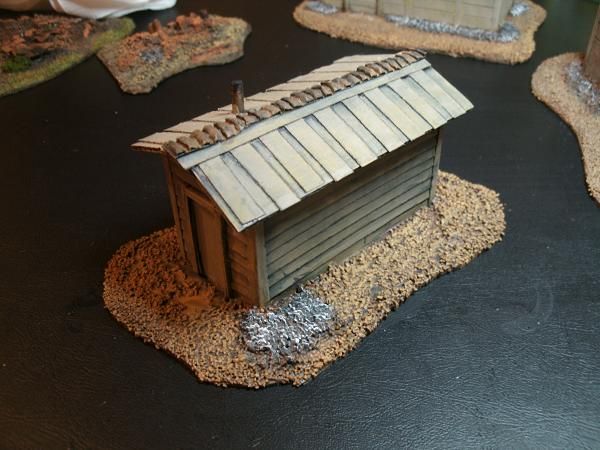
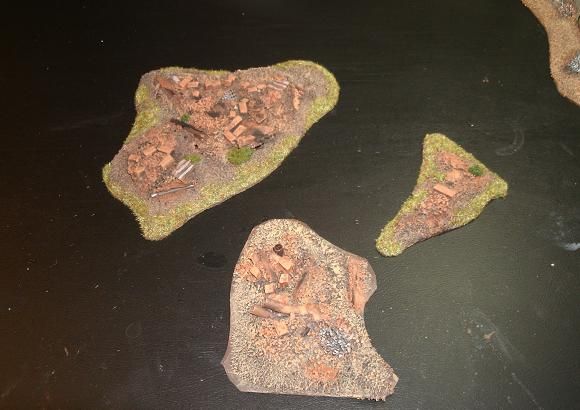
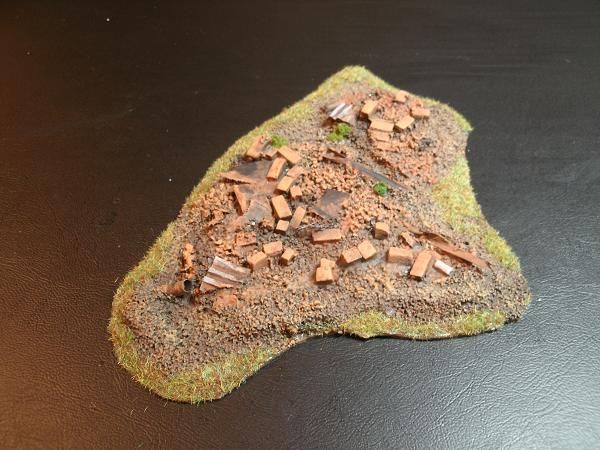
 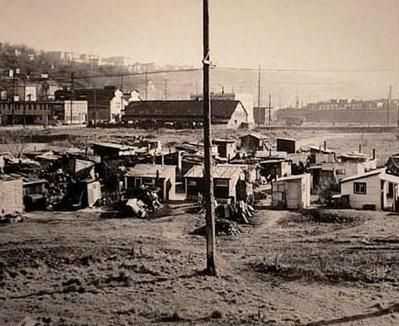 For any game taking place in the US during the 1930's a Hooverville is a must have. So toward this end I started working on a project to build my own. Originally I wanted to do at least a dozen shacks, but I lost steam after the seventh building and just decided to throw in some tents and junk piles to fill things in a bit. First I spent a week or so staring at these pictures and trying to figure out some basic building styles and materials. Then I went to town, and started putting some buildings together. I wanted to try out some different building techniques, that I hoped would be a little faster than some of the other buildings I have done in the past. I settled on using mainly cardboard. I made a simple rectangular shape, then put in a slightly slanted roof in most cases. To try and capture the variability I built a few that used the wall boards as slats and a few to look like clapboard construction. This was done by using 1/4 inch strips of paper and gluing the vertical or horizontally and the construction method dictated. Then I ended up covering a few random areas with card stock, that I later painted black, for tar paper. On a few the vertical boards were covered with another set of boards covering the cracks. The roofs are the same way for the most part. Boards, covered with tar paper, corrugated tin and in one case wood shingles.